Every plank tells a story. Before you choose a floor, understand the language behind it.
Character
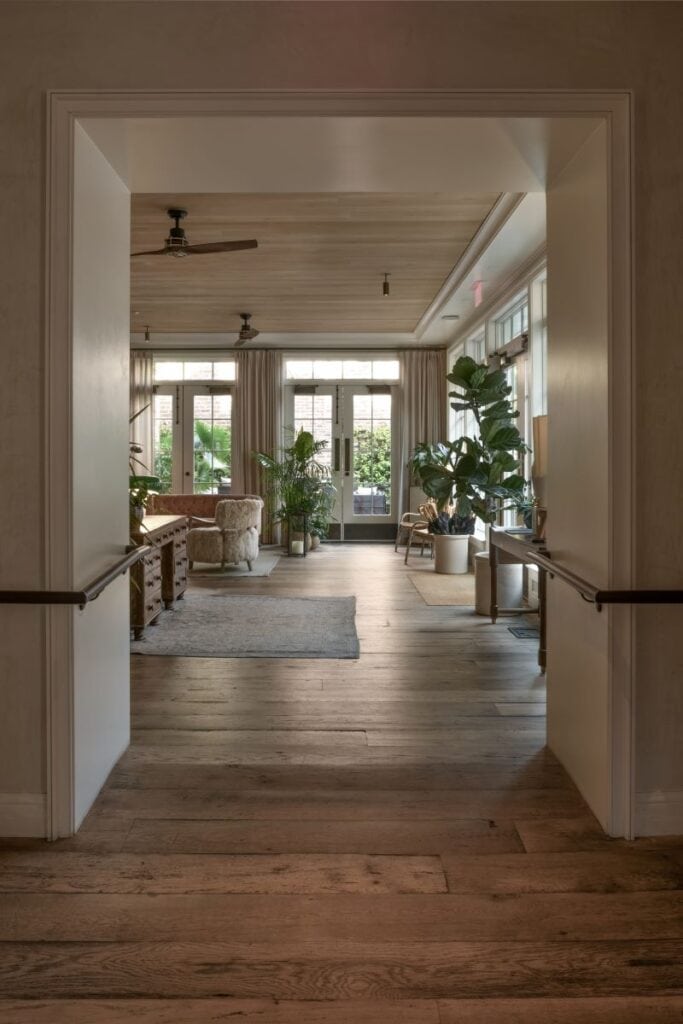
Character refers to the natural variation a tree accumulates over its lifetime: the marks, movements, and imperfections that make each plank one of a kind. In hardwood flooring, character is graded from light to heavy, and it’s one of the most important choices you’ll make.
At the lighter end, you’ll find floors with subtle variation and gentle tonal movement. Moving toward medium character introduces more visible natural markings. At the heaviest end sit floors like reclaimed collections, where history is written directly into the wood: century-old knots, barn-worn surfaces, and the kind of depth you simply can’t manufacture.
Knots are where branches once met the trunk. Runs are fine linear markings (sometimes called “checks”) formed as the tree grew, later stabilized and filled during milling. Both are character. Both are beautiful. Neither is a flaw.
Variance
Variance is the range of natural colors and tone across the planks on a floor. It’s closely related to character, but specific to color movement rather than physical markings. A high-variance floor will shift dramatically from plank to plank; a low-variance floor reads more uniform.
Where a tree grows shapes its variance profoundly. Domestic American white oak has notably high variance, the result of diverse soil compositions, varied air and humidity, and extensive cross-pollination between the many oak varieties that grow across the continent. European oak, particularly from alpine regions, behaves very differently. The Alps act as a natural barrier to cross-pollination, leaving only three varieties of white oak on the European side. Combined with tighter forestry regulations, more consistent soil, and controlled growing conditions, European oaks tend to produce wider, denser boards with a more restrained, even color palette.
In short: if you love variation and movement, lean domestic. If you prefer quiet, cohesive color, European oak may be your material.
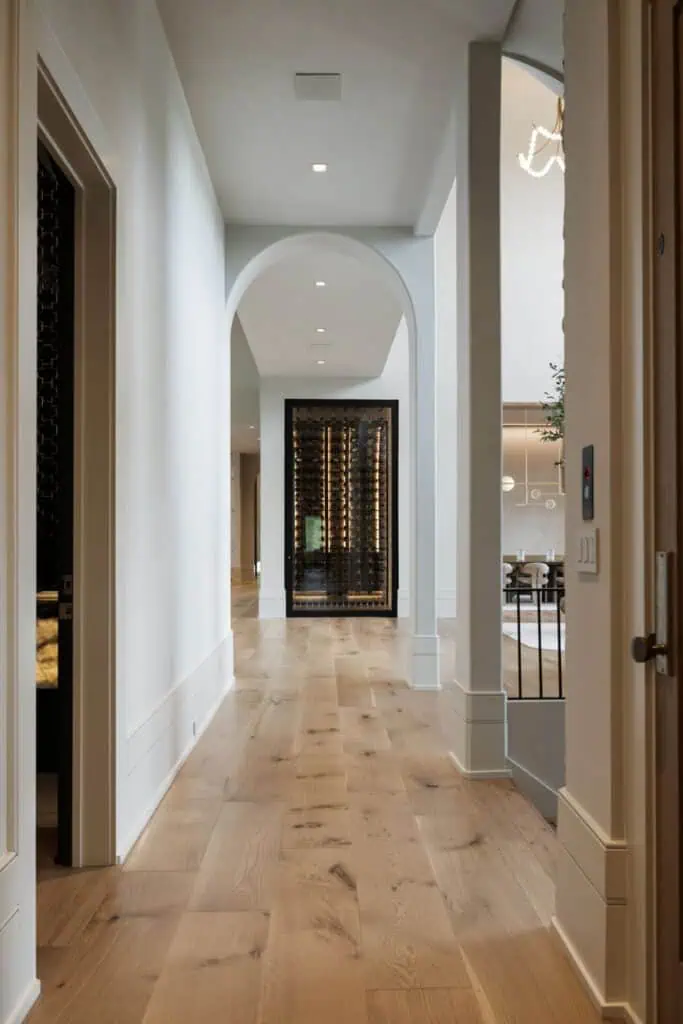
Select Grade
Select, or select grade, means the wood has been hand-sorted to remove character. Every knot, every run, every significant marking is pulled out. What remains is clean, consistent, and clear-grained. It’s the floor for people who want the warmth of real wood with the visual calm of a very controlled palette.
Select grade is a choice, not a hierarchy. It isn’t “better” than character grade; it’s a different intention. Many contemporary and minimalist interiors call for it. Others find it too quiet. The key is knowing what you’re choosing.
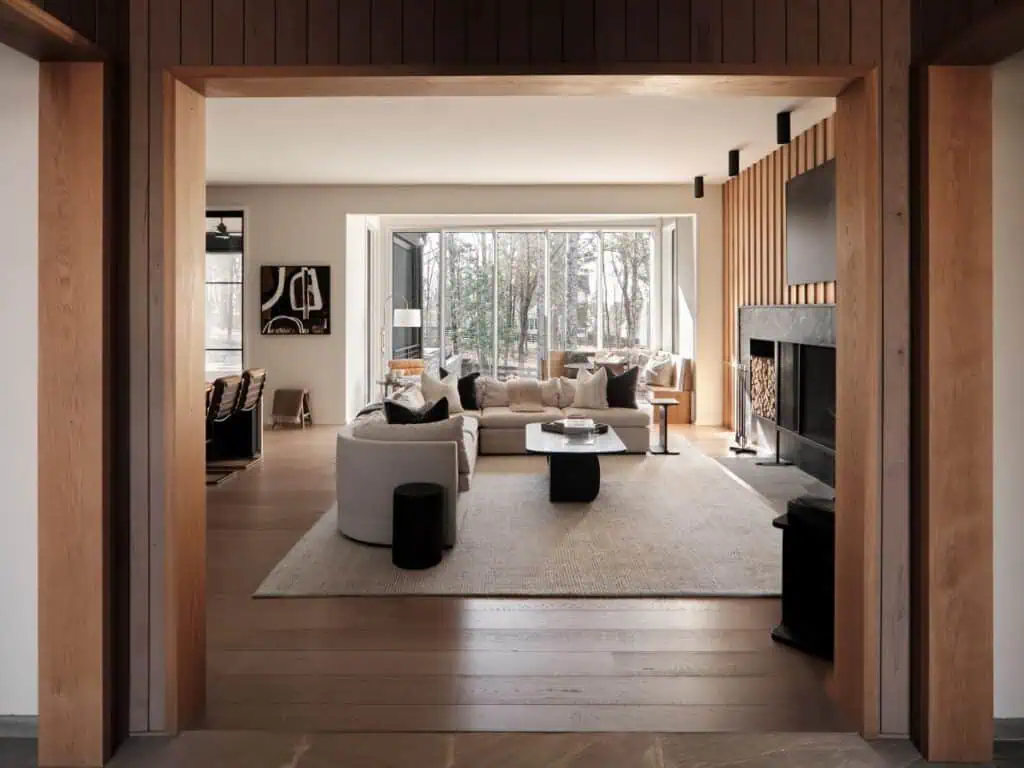
Cerusing
Cerusing is a finishing technique with roots in 16th-century Europe, originally used on oak furniture and paneling. The process involves opening the wood’s grain (typically with a wire brush) and working a light-colored paste or wax into those channels. The raised grain catches and holds the finish; the higher surfaces are then cleared, leaving the fill visible only in the depth of the pores.
The result is a floor with a ghostly, silvery-white quality that simultaneously emphasizes the grain and softens the overall tone. It works especially well on open-grained species like oak, where the contrast between pore and surface is most pronounced. Modern cerusing is often achieved with white oils or pigmented wire-brush finishes rather than traditional wax, but the visual effect remains the same: that luminous, limed appearance.

The Cuts: Live Sawn, Rift & Quartered, Plain Sawn
How a log is cut through the mill determines the grain pattern on the face of every plank, and it changes the look, the feel, and even the long-term performance of a floor.
Live sawn is the most natural cut: the log is run straight through the saw in parallel slices, like a loaf of bread. Because planks are taken from every position in the log, you get the full range. Some show flat, cathedral-arched grain; others show the tighter linear pattern of quartersawn material, and everything in between. Live sawn is the most expressive cut and the most efficient use of the log.
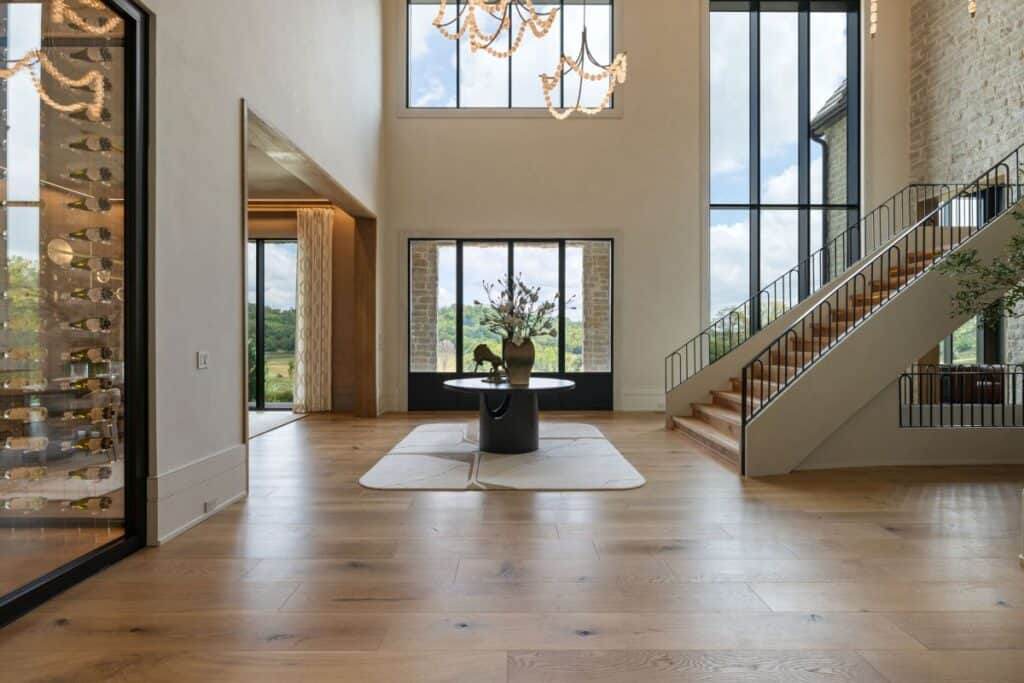
Rift and quartered is precision cutting. The log is first quartered, then each section is milled so the saw runs at a right angle to the growth rings. The result is a tight, straight, pencil-line grain with none of the sweeping cathedrals of plain sawn material. Rift and quartered planks move less with humidity changes and carry a restrained elegance that suits modern and traditional interiors alike. They are, however, more labor-intensive to produce, which is reflected in the price.
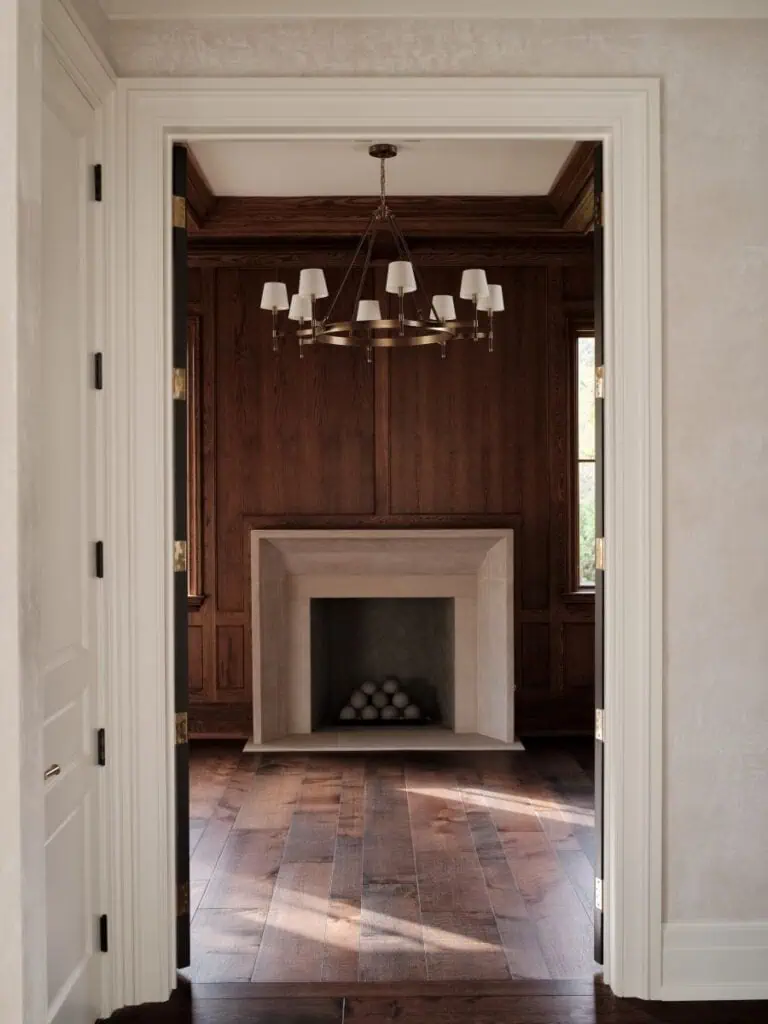
Plain sawn (also called flat sawn) is the most common cut in production flooring. The log is milled with the growth rings running roughly parallel to the face, producing the familiar arching grain patterns and occasional medullary ray fleck in species like oak. It’s economical and widely available.
The cuts and character grades overlap freely. You can specify a live sawn floor with heavy character, or a live sawn floor in select grade, pulling only the cleanest planks from the run. The cut and the character grade are two separate dials.
Wood is a natural material. It moves, breathes, and ages. Learning this vocabulary isn’t just useful when you’re shopping for a floor. It’s a way of understanding what you’re bringing into a space: something grown, not manufactured, with a history that predates the room it lives in. Textures design consultants are here to help you navigate these choices and find the floor that’s right for you.